3 calorie-counting mistakes that keep you from losing weight
Counting calories but the scale won't budge? Most likely one of three typical mistakes is in play — fat eyeballing, background calories, and incorrect serving sizes. We break each one down.
"I'm counting calories and the scale won't move." This is probably the most common complaint from people trying to enter a calorie deficit. The usual next step: blame "genetics" or switch to an even stricter plan — and quit within two weeks.
Most of the time the problem isn't metabolism. It's that the count itself drifts away from reality. Let's break down 3 mistakes that show up in almost everyone who tried and didn't get results.
Mistake 1. Eyeballing — especially fats
Oil in the pan, a spoon of mayo, a chunk of cheese, salad dressing. It looks like "a little," but it's 100-200 kcal that never made it into your tracker.
Real example: a "light" salad. 200 g of vegetables + 1 tablespoon of oil (15 g). By eye you'd estimate "150 kcal." Reality: 180-200 kcal, because oil alone is ~135 kcal. That's already a 30-50 kcal gap. Sounds tiny?
You'll do this 3-4 times a day. That's +300-500 kcal to your balance. If you planned a 400 kcal/day deficit — it's now zero. If 200 — you're in a surplus. The scale stays flat or climbs, and you're "counting."
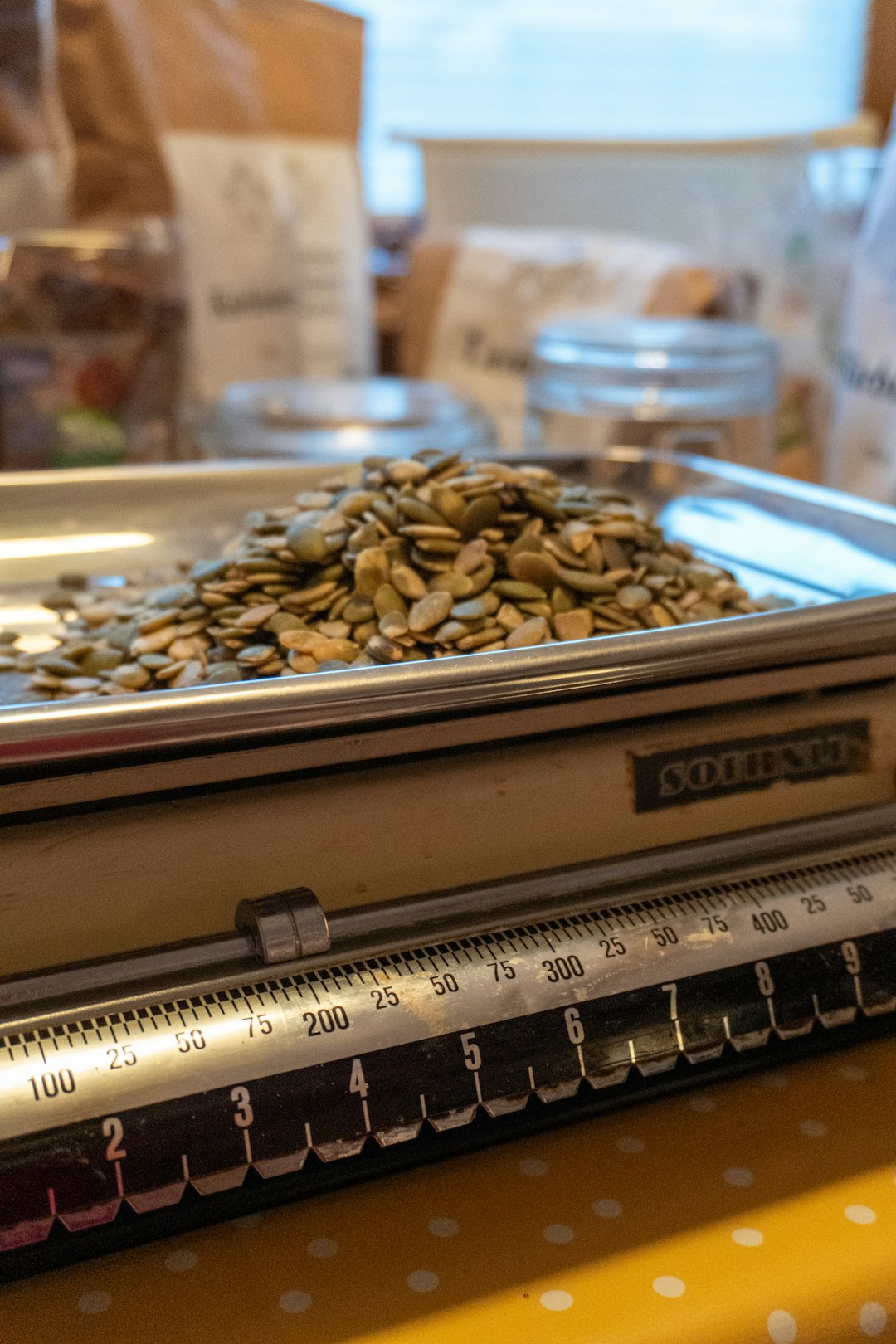
Fix: weigh fats. Kitchen scale, one tablespoon of oil = 15 g, log it as 135 kcal. Takes 3 seconds and removes 80% of this mistake.
Mistake 2. Background calories
Everything you don't consider "a meal" but that still eats your budget.
A typical day:
- Coffee with milk 3x a day (50 ml of 2.5% milk per cup) → +120 kcal
- Office cookies (one cookie = 50 kcal, 3 throughout the day) → +150 kcal
- Almonds during a movie (30 g) → +180 kcal
That's +450 kcal/day that isn't in any tracker. You didn't "eat them" — you "snacked." But your stomach and the scale count them anyway.
Liquid calories are especially sneaky. Lattes, kefir, kissel, sweet compote, fruit juice — easily add +200-400 kcal a day because liquid barely triggers fullness.
Fix: log EVERYTHING that goes in your mouth during the day. A nut — log it. A sip of juice — log it. After a week you'll start to see your pattern and can edit it consciously.
Mistake 3. Packaging serving size vs. actual portion
The manufacturer prints "1 serving = 50 g." You scoop with a spoon into a bowl. No scale — you estimate by eye. The actual amount is 70-80 g.
- Granola: "1 serving = 40 g," actually 60-70 g. +100 kcal.
- Muesli with dried fruit: stated 50 g, real 70-80 g. +100-150 kcal.
- Nuts in recipes: "a handful" = 30-50 g, not 15.
- Cheese: "a piece" = 30-40 g, not 20.
- Pasta: "a normal serving" = 100 g dry, not 70.
The reverse can happen too: sometimes people take LESS than stated and end up overestimating calories. The mistake works in your favor, but in a deficit that's rare.
Fix: weigh "your usual portion" of frequently-eaten foods once. You don't need to do this daily — once is enough. Learned that your standard bowl of granola = 65 g? From now on, just log 65.
The pattern
One of these three mistakes is present in almost everyone who "counts but doesn't lose weight." More often — all three at once. The sum of errors: 500-800 kcal/day. That's no longer a "deficit" or "maintenance" — it's a full surplus.
The good news: all three are fixed with one tool — accuracy. You don't need to eat less or count every crumb. You need to look honestly once at what actually goes into your stomach for a day — and keep a journal for one or two weeks that doesn't lie.
In NutriApp you can either log products with grams manually, or photograph your plate — the app breaks it into ingredients with a starting gram estimate that you can clearly tell is "right" or "off." It cuts down the eyeballing significantly.
Which of the three is yours? Vote in the VK discussion.
Count calories automatically in NutriApp
Open NutriApp