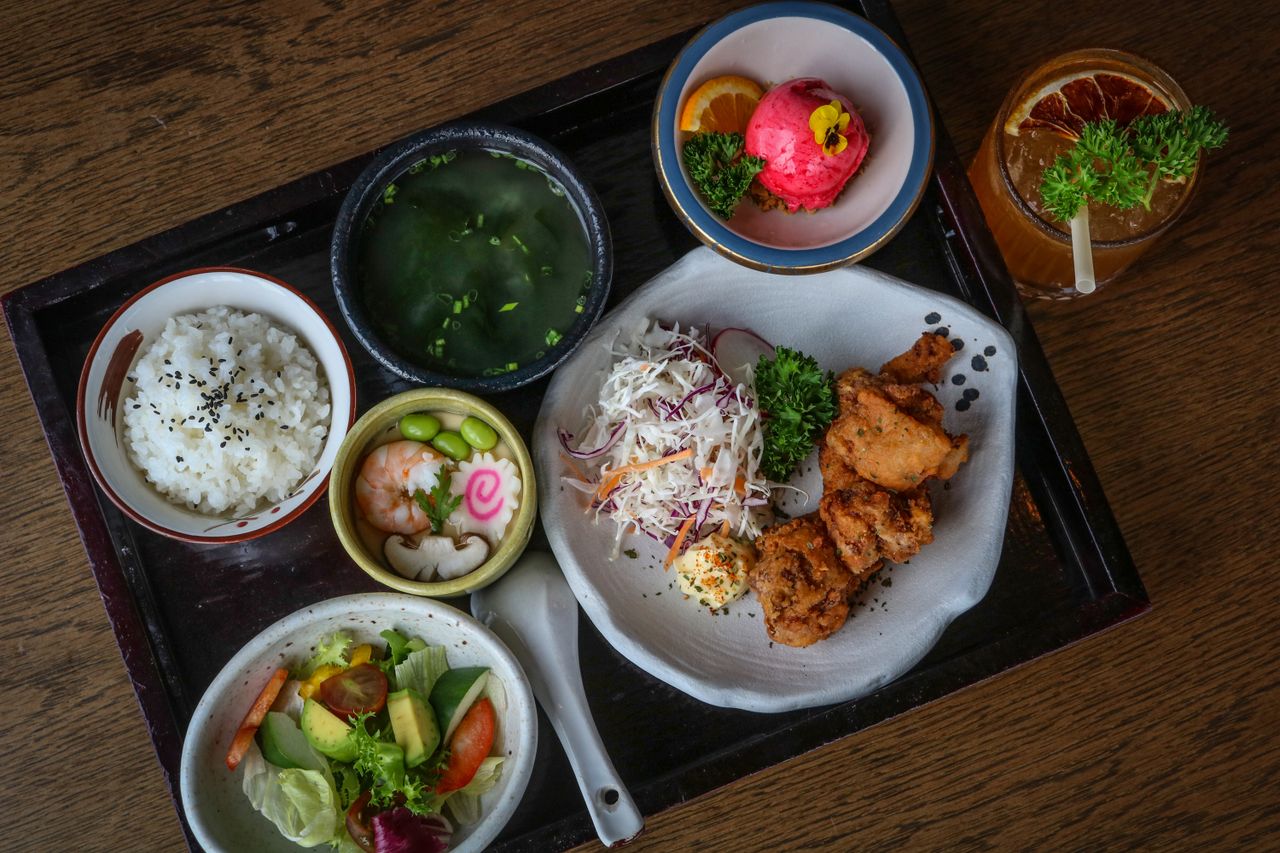
Calories in a set lunch: how to choose and not overeat
A by-the-numbers breakdown of a set/business lunch — soup, salad, main, side and bread with a drink. How many calories each canteen dish holds, why the same lunch can be 550 or 1000+ kcal, and how to build a lighter combo.
A set (business) lunch is convenient and cheap, but it's assembled like a construction kit — and the total swings from ~500 to 1000+ kcal depending on what exactly you pick. The same "set meal" can be light or twice as heavy. Let's break it down by parts, where it's "cheap" and where the overshoot hides — so you choose consciously rather than on autopilot.
Why a set lunch is counted by parts
The mistake is thinking of a set meal as one dish. In reality it's a set of soup, salad, main, side and "extras", and each element can be built light or heavy. It's these small choices that add up to the twofold difference in calories. So we look not at "lunch in general" but at each item separately.
Soup — 200-400 kcal
Vegetable, chicken or borscht — moderate, ~200-250 kcal. But solyanka, kharcho and a creamy cheese soup are already 350-400. The difference is the base: a clear broth versus a heavy fried-onion-and-cream base. Want it lighter — take a broth-based soup, not a "thicker" one.
Salad — 80-300 kcal
Fresh vegetables — just ~80-100 kcal per serving. But Olivier, "mimosa" and other mayo salads are 250-300. The ingredients are nearly the same; the dressing decides everything: a spoon of oil with lemon versus generous mayo. A vegetable salad is the cheapest way to add volume and fiber to lunch.
Main — 300-450 kcal
A cutlet, goulash, baked fish or chicken. Steamed and baked are lighter, fried and breaded are heavier. Grilled chicken breast almost always beats a battered schnitzel: the same base, but plus oil and breading on top. This is usually the main protein of the meal — not the place to skimp, better to pick a lighter cooking method.
Side — 150-340 kcal
Buckwheat and rice — ~150-200 kcal. Buttery mash — ~200. Fries — ~340. Swapping fries or fatty mash for grains or vegetables saves a couple hundred calories with no loss of fullness. The side is the easiest place to "trim" the excess with a single choice.
Bread and a sweet drink — +150-250 kcal
The "background" add-on nobody counts. A couple of slices of bread and a glass of sweet compote easily add +200-250 kcal on top. A slice of bread by itself isn't scary, but paired with a sweet drink it's a noticeable bump to the combo. Water instead of compote removes half of that.
The light combo versus the heavy one
The same business lunch, assembled differently:
- Light (~550-600 kcal): vegetable soup + salad without mayo + grilled chicken + buckwheat.
- Heavy (1000+ kcal): solyanka + Olivier + breaded schnitzel + buttery mash + bread + compote.
The difference is twofold, and almost all of it is in the dressings, the cooking method and the "background" add-ons — not the portion size.
How to build a lighter combo
- Soup — clear and broth-based, not thick and creamy.
- Salad — fresh vegetables instead of mayo ones.
- Main — baked or grilled, not fried and breaded.
- Side — grains or vegetables instead of fries and fatty mash.
- Drink — water or unsweetened tea instead of compote.
Takeaway
A set lunch fits comfortably into a deficit — as long as you remember the calories come not from the dishes themselves but from the dressings, breading and the "background" of bread and a sweet drink. Build the combo along the light path and you get a full hot lunch at ~550-600 kcal instead of 1000+.
A home packed lunch beats all this even more cheaply and with full macro control — but if you eat at the canteen, in NutriApp you can build your tray and see the honest total before you eat it all.
So what do you usually get at a set lunch — soup, salad or the main? Share it in the VK discussion.
Count calories automatically in NutriApp
Open NutriApp