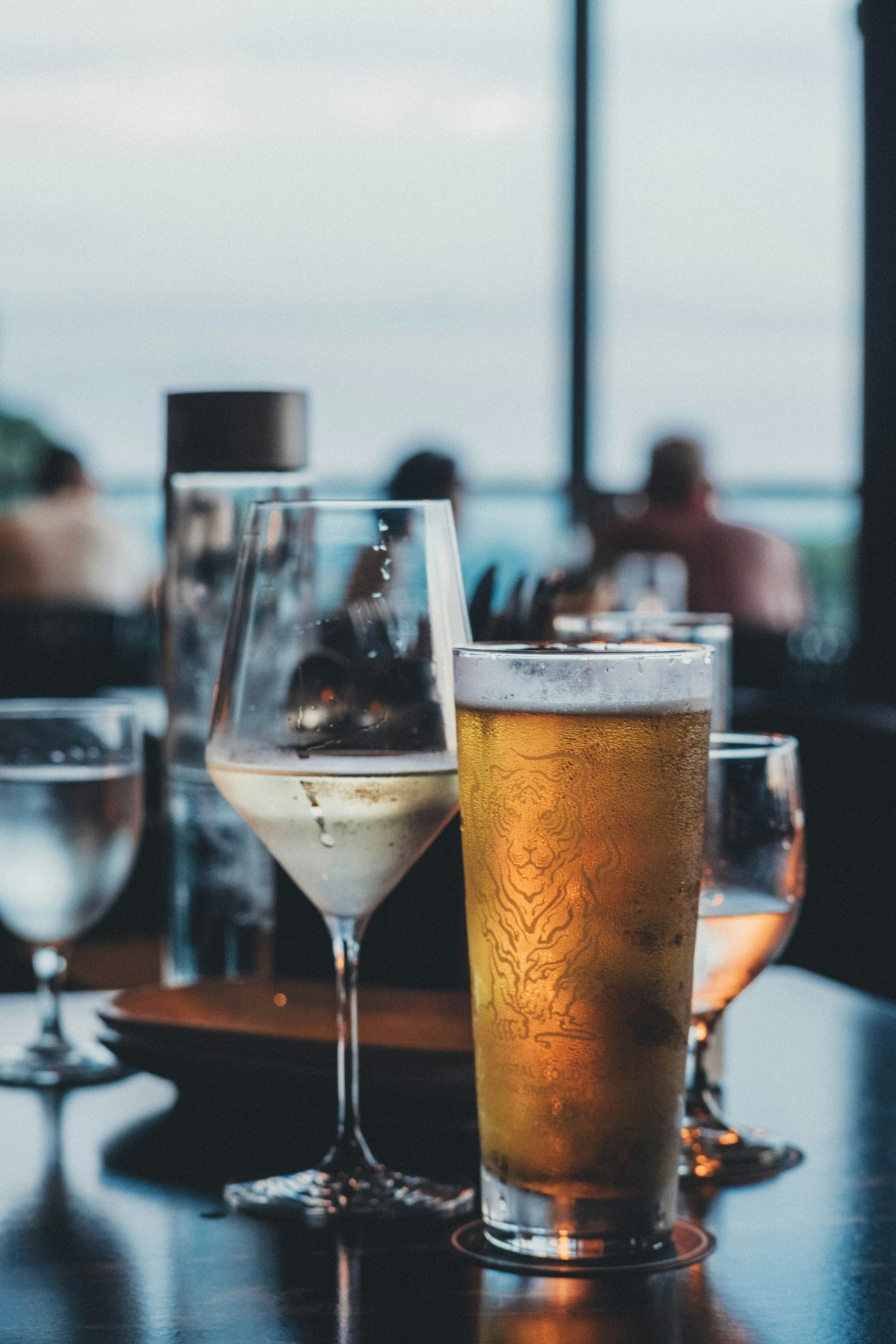
Calories in alcohol: beer, wine, cider, spirits, and cocktails
A by-the-numbers breakdown of alcohol calories — beer, dry and sweet wine, cider, spirits, and cocktails. How many kcal in a glass and a bottle, why alcohol works against a deficit, and what to choose if you count calories.
Alcohol is the last thing people think about in a deficit — which is a mistake: in summer it's one of the biggest "invisible" holes in your counting. Let's break down by the numbers where the calories hide, what's "lighter," and what hits a deficit hardest. No moralizing — just numbers, so you can fit it in on purpose.
Why alcohol is counted separately
Three reasons drinks aren't "just a beverage" for someone watching calories:
- Alcohol is 7 kcal per gram — almost like fat (9 kcal/g) and nearly double carbs and protein (4 each). Even a dry, sugar-free drink carries calories from the alcohol itself.
- They're "empty" calories. They don't fill you up at all — you're just as hungry after a glass as before, sometimes more.
- Your body burns alcohol first. While it deals with the alcohol (which it treats as a toxin), the processing of fat and carbs is paused — and the snacks are more readily stored.
Plus alcohol lowers your guard on appetite: over beer and wine it's easy to eat twice the snacks you would sober. Often it's those, not the drink itself, that break the deficit.
Light beer — ~42 kcal / 100 ml
A 0.5 L bottle = ~210 kcal. Dark and strong beers are more. The problem isn't the concentration but the volume: half a liter goes down unnoticed, yet it's a full snack's worth of calories. A couple of bottles in an evening is 400+ uncounted kcal, plus snacks.
Dry wine — ~68 kcal / 100 ml
A 150 ml glass = ~100 kcal. Semi-sweet and sweet wines are noticeably higher from residual sugar (up to ~85-90 kcal/100 ml). Dry is the most reasonable option per glass, and topping it with sparkling water (a wine spritzer) lowers the calories per volume even further.
Sweet cider — ~50 kcal / 100 ml
A 0.5 L bottle = ~250 kcal, and most of it is sugar. "Light and fruity" turns out to be one of the sweetest options — essentially sparkling juice with alcohol. Dry (brut) cider is noticeably lighter.
Spirits (vodka, whiskey, gin) — ~230 kcal / 100 ml
It sounds scary, but the serving here is 40 ml = ~90 kcal, with no sugar on its own. Neat spirits aren't the calorie record-holder per serving. It's the mixers that decide everything: with soda and ice it's ~90 kcal, but with cola or sweet tonic it's 200+.
Cocktails — 200-400+ kcal
The outright leaders. Piña colada, margarita, daiquiri, mojito — syrups, liqueurs, juice, and cream add more calories than the alcohol itself. One cocktail easily equals a full meal, yet drinks like lemonade.
What's "lighter" in a deficit
- Optimal: a glass of dry wine or spirits with soda and ice — ~90-100 kcal per serving, no sugar.
- Middle: beer — if you watch the volume (one bottle, not three).
- Heaviest: sweet cider, sweet wine, and cocktails — here the calories come mostly from sugar.
Simple rule: the less sugar in the glass and the smaller the volume, the easier it fits. A sweet mixer (cola, tonic, juice, syrup) almost always costs more than the alcohol itself.
Where the extra calories hide
- Mixers. Cola, sweet tonic, juice, syrup — +100-150 kcal of sugar per serving. Soda, sugar-free tonic, ice — nearly zero.
- Bar snacks. Chips, nuts, crackers — calorie-dense and "endless": you eat them without noticing while you drink.
- Volume. Beer and cocktails go down easily, and "just one more" turns 200 kcal into 600.
Takeaway
Alcohol doesn't have to break your deficit, but you do need to count it honestly: alcohol is 7 kcal/g, half a liter of beer ≈ 210 kcal, a glass of dry wine ≈ 100, and a cocktail is a meal's worth. The difference between "light" and "heavy" is in the sugar and the volume, not the proof.
In NutriApp, alcohol is in the database — count a glass or a bottle and immediately see how much of your daily budget is left for food. Save your usual drink as a template and log it with one tap. And for the non-alcoholic summer options, we gathered them here: 5 refreshing drinks under 100 kcal.
So do you count alcohol in summer, or is it "that's not food"? Share it in the VK discussion.
Count calories automatically in NutriApp
Open NutriApp