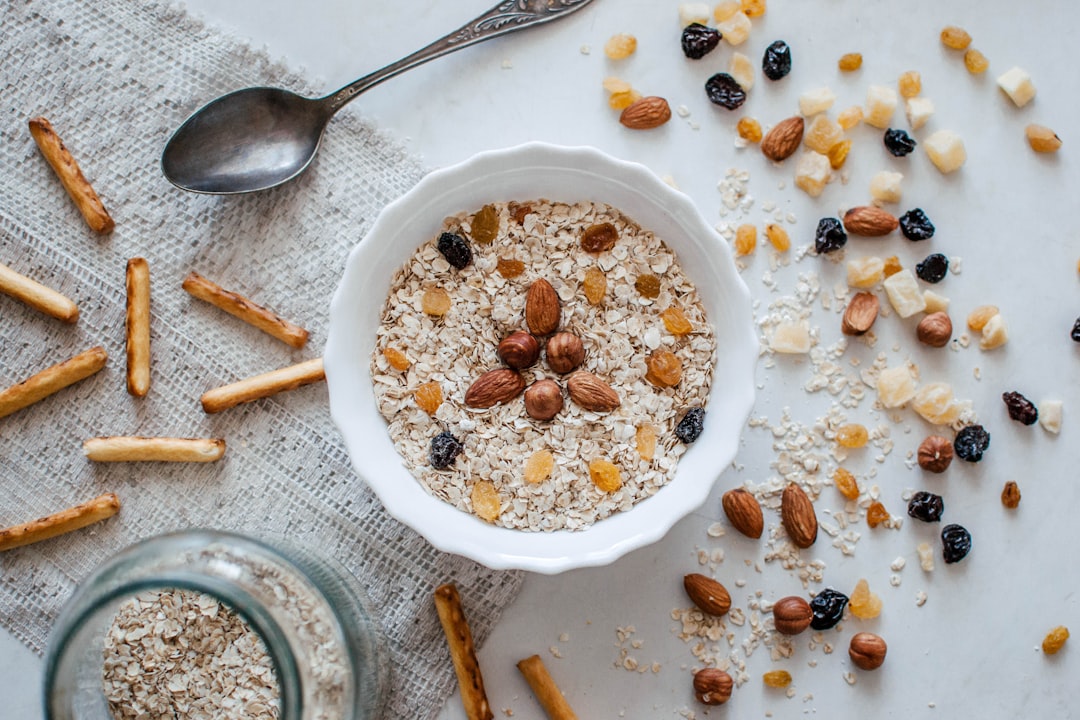
Oatmeal macros — milk vs water, the real calorie difference
A detailed breakdown of calories and macros for oatmeal cooked with water, 2.5% milk, and 3.2% milk, with exact grams. Plus how much typical toppings add — honey, banana, nuts, chocolate.
"Oatmeal is healthy though." Sure, but which one? A bowl can be 220 kcal on water or turn into a 660 kcal meal with milk, honey, and banana. Let's break it down by grams so you stop confusing a diet breakfast with dessert in porridge form.
The base: 60 g dry oats (a standard serving — fits in a mug or medium bowl) + 200 ml liquid.
On water
60 g oats + 200 ml water
≈ 220 kcal | P: 8 | F: 4 | C: 40
The "cleanest" version for a deficit. Minimum fat, maximum slow carbs. Taste-wise it's less interesting than the milk version, but this one shows up in weight-loss guides for a reason.
Good for people who:
- track calories down to the tens and don't want to "hide" milk in the journal
- don't tolerate dairy well
- want a minimal-calorie breakfast with carbs before a workout
With 2.5% milk
60 g oats + 200 ml 2.5% milk
≈ 320 kcal | P: 14 | F: 9 | C: 49
That's +100 kcal vs water, but you get 6 g more protein and calcium. A solid balance of taste and calories — most people eat this version.
If you're on maintenance or a small deficit (300-500 kcal/day) and don't want to suffer through breakfast, this is your pick.
With 3.2% milk
60 g oats + 200 ml 3.2% milk
≈ 340 kcal | P: 14 | F: 10 | C: 49
+20 kcal vs 2.5% — basically 1.5 g of extra fat. Not critical, but if you track to the tens and you're in an aggressive deficit, go with 2.5%. In daily life, you just use whatever milk is already in your fridge.
Where a "healthy breakfast" becomes dessert
Now the typical toppings most people don't log because "it's just a little":
- 1 tsp sugar (5 g) → +20 kcal
- 1 tbsp honey (15 g) → +50 kcal
- 1 tbsp butter (15 g) → +110 kcal
- 30 g walnuts → +200 kcal
- 100 g banana → +90 kcal
- 50 g chocolate → +270 kcal
Let's calculate the "Pinterest perfect breakfast":
Oatmeal with 2.5% milk + honey + banana + 30 g walnuts = 320 + 50 + 90 + 200 = 660 kcal.
That's no longer a light breakfast — it's a full meal that covers about a third of an average adult's daily calories. Not "bad" — but not "diet food" either.
"Oatmeal with chocolate and banana"? 680 kcal. Dessert in porridge form. No illusions.
The takeaway
Oats by themselves are a great product: cheap, filling, full of slow carbs and fiber. The problem isn't the porridge — it's that people underestimate the calories from toppings, especially liquid ones and fats.
If you want to know honestly what you're eating:
- Decide what you cook on (water / 2.5% milk / 3.2% milk)
- Log every topping completely — each 15 g of butter, each handful of nuts
- Once a week, weigh your "usual portion" of oats — almost everyone ends up at 70-80 g, not 60
In NutriApp all of these ingredients are already in the database — add them, set grams, calories and macros compute automatically. For oatmeal there are ready-made templates like "oatmeal with milk and banana" — save once, log with one click after that.
Which one do you cook — water or milk? And what toppings do you add? Drop it in the VK discussion.
Count calories automatically in NutriApp
Open NutriApp