Pumpkin: calories, macros and benefits (the autumn cheat code in a deficit)
How many calories are in pumpkin, its macros and benefits — fiber, beta-carotene, potassium. Why pumpkin is three times lighter than potato, where the catch hides (cream, pie, latte) and how to cook it in a deficit for volume and fullness at almost no calories.
On Tuesday we called pumpkin the autumn champion in our roundup of seasonal foods — today let's break down why. It's one of the "cheapest" foods calorie-wise while still being filling and sweetish: an ideal combination for a deficit.
Calories and macros
Per 100 g of raw pumpkin:
- Calories: ~25 kcal
- Protein: ~1 g
- Fat: ~0.1 g
- Carbs: ~6 g (a good share of it fiber)
A 200 g serving of roasted pumpkin is just ~50 kcal. For comparison: 200 g of potato is ~160 kcal. Pumpkin is three times lighter while filling the plate the same — a great way to "trick" your appetite with the same amount of food.
What it's good for
- Fiber — keeps you full for a long time and aids digestion.
- Beta-carotene (provitamin A) — that bright orange flesh; good for skin and vision.
- Potassium — important for the heart and water balance.
- ~90% water — hence the large serving size at minimal calories.
In essence pumpkin gives fullness, vitamins and a sweetish taste at almost no calorie "cost" — exactly what you want when holding a deficit and feeling the autumn chill.
Where the catch hides
The pumpkin itself is almost free — but what you cook it with isn't:
- Pureed soup on cream and butter. An autumn classic, but cream and butter easily add +200-300 kcal to a serving. The pumpkin in there is 30 kcal; everything else is fat.
- Pumpkin pie. That's about flour, sugar and butter, not pumpkin. Calorie-wise it's a full dessert.
- Pumpkin spice latte with syrup. 300+ kcal of liquid sugar, with barely any actual pumpkin — just the flavor and color.
Simple rule: pumpkin in a deficit is almost always a win; the downside starts where cream, sugar and flour get added to it.
How to eat pumpkin in a deficit
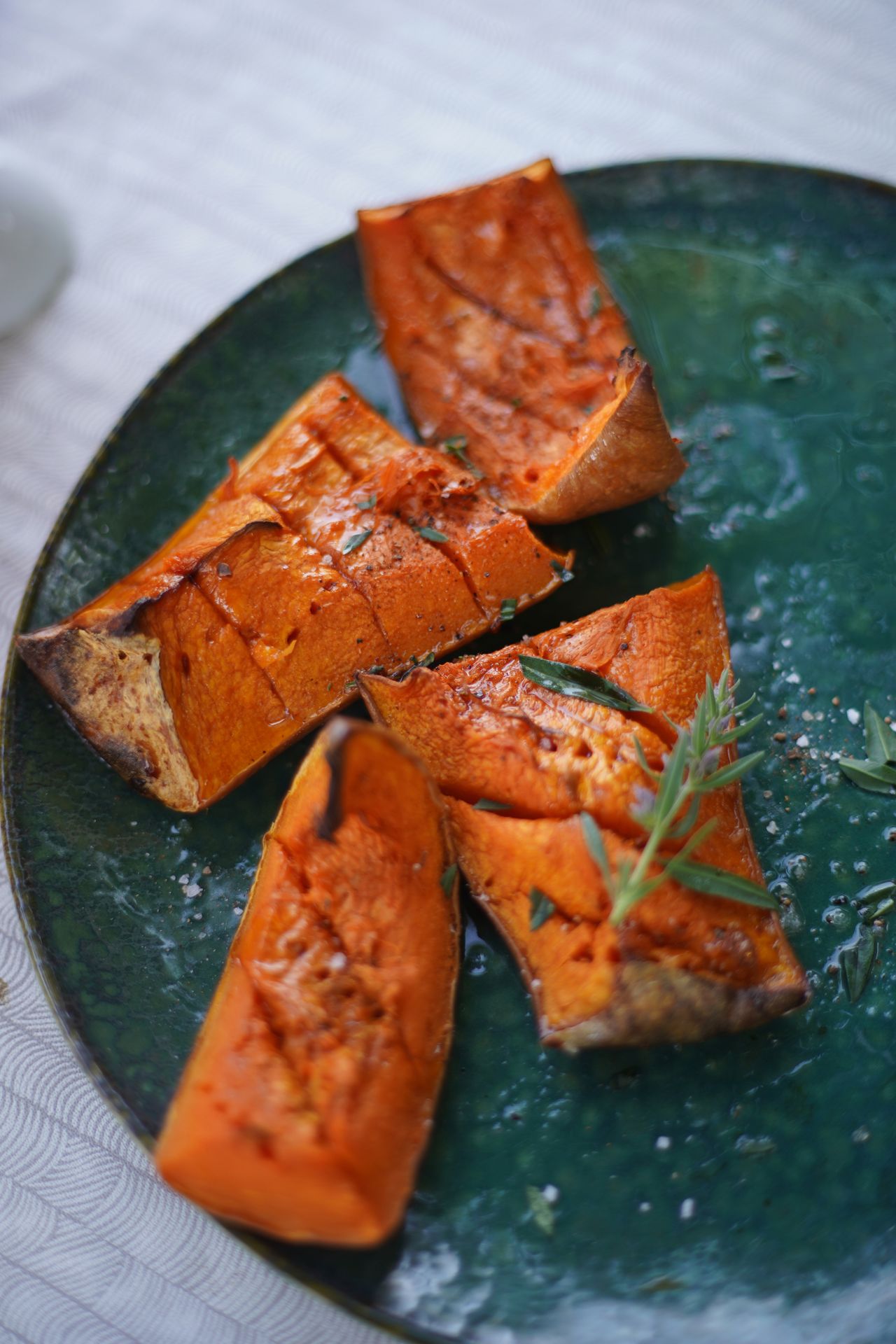
- Roast it in wedges without sugar or honey — pumpkin is sweet on its own and needs no add-on (as in the photo above). Oil in a thin layer or a spritz, not poured.
- Make pureed soup on broth, not cream; for creaminess add more pumpkin or a little potato, not fat.
- Add it to porridge or stew — it brings sweetness and volume at almost no calories.
- Swap it for part of the side — instead of potato or buttery mash.
The sweetish taste covers a dessert craving well — essentially an autumn "cheat code": it feels like something sweet, but costs almost nothing calorie-wise.
Takeaway
Pumpkin is one of the most cost-effective foods in a deficit: ~25 kcal per 100 g, plenty of fiber and beta-carotene, three times lighter than potato. Eat it roasted or in a broth-based soup and you get warm, filling, sweetish food at almost no calories. And the calories come not from the pumpkin but from the cream, sugar and flour around it.
In NutriApp you can build a pumpkin soup or bake and see what the add-ons really cost — the pumpkin itself almost always stays a win.
So how do you like pumpkin — roasted, in soup, or not a fan at all? Share it in the VK discussion.
Count calories automatically in NutriApp
Open NutriApp