A 5-minute breakfast: 5 quick options for mornings with no time
Five quick breakfasts at 250-320 kcal that take five minutes to make or get assembled the night before. Calories, protein and clear portions — plus how many calories hide in your morning coffee.
September brought the alarm clocks back: wake up, get ready, and breakfast gets about five minutes. Usually that ends with coffee on the run — and by eleven you want everything at once and your hand reaches for the cookies by the coffee machine. Here are 5 breakfasts you actually have time for: some take five minutes, some get assembled the night before.
Why "coffee and a pastry" doesn't work
It's not that the pastry is "bad". It's the composition: 400 kcal from dough and a latte comes with almost no protein and no fiber, so it keeps you full for an hour or so. Then hunger is back — and the calorie budget is already spent.
A quick breakfast that works rests on three things:
- 20-30 g of protein. That's what decides whether you make it to lunch without snacking.
- No more than five minutes of cooking — or prep the night before. Anything harder doesn't survive a real morning.
- Familiar foods. Breakfast should assemble itself on autopilot, without a recipe and scales every time.
Below are five options that fit those rules.
1. Cottage cheese with berries — ~300 kcal
200 g of 5% cottage cheese + a handful of berries (~100 g) + a teaspoon of honey. There's nothing to cook: open, spoon out, top.
That's ~34 g of protein — more than in 130 g of chicken breast, which is exactly why sweets stop calling before lunch. If the cottage cheese feels dry, add a couple of spoons of yogurt rather than sour cream: the calorie difference is two to three times.
Switching from 5% to 2% saves ~40 kcal, but barely changes how full you feel — pick by taste, not by "fat-free" marketing.
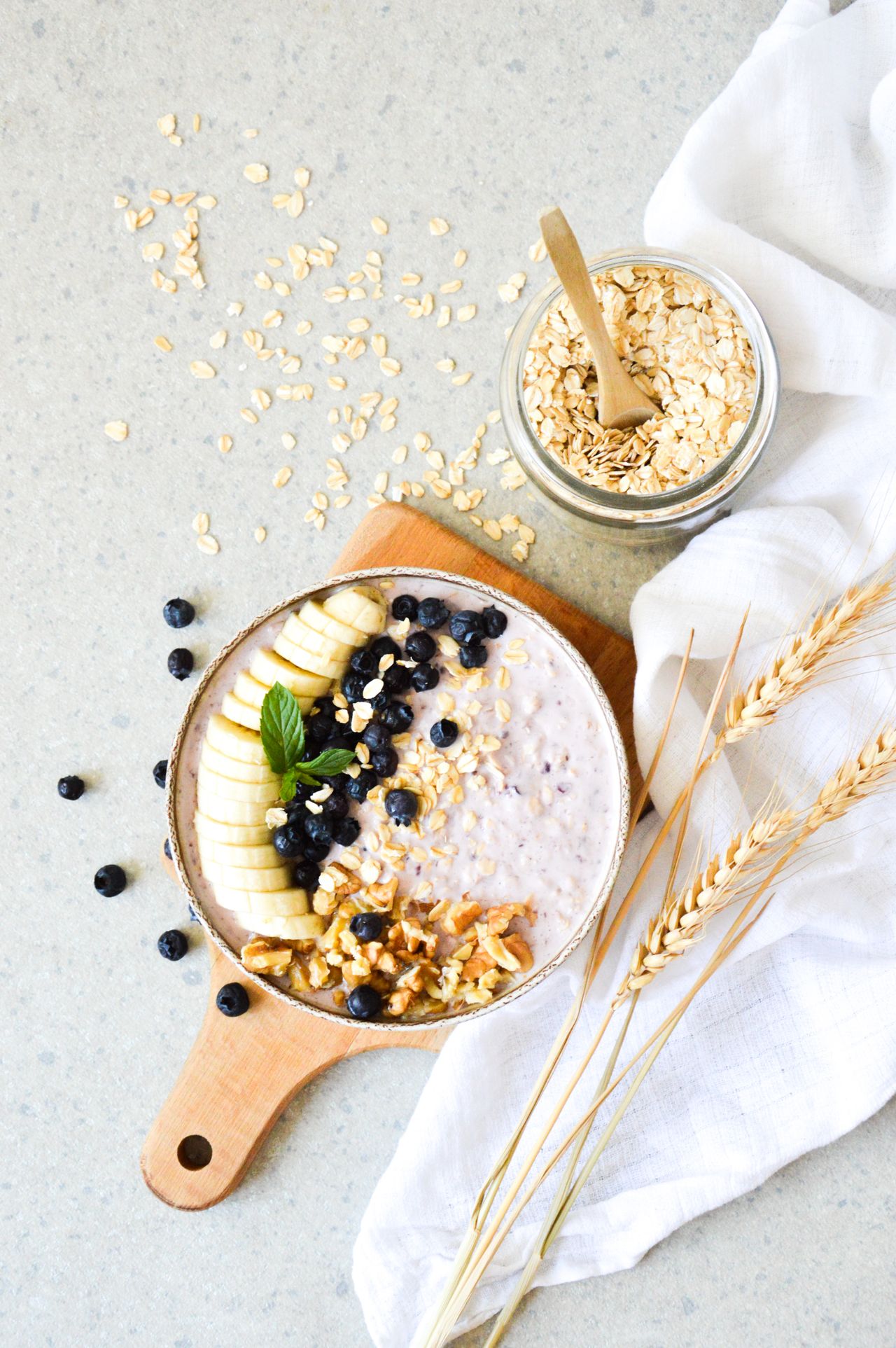
2. Overnight oats — ~300 kcal
40 g of oats (rolled, not instant) + 150 g of yogurt or milk + berries. It all goes into a jar in two minutes in the evening, sits in the fridge overnight, and in the morning you take out a finished breakfast.
This is the best option if you have neither time nor willpower in the morning. The bonus: the portion was measured last night — and the morning "pour some in by eye" is usually where the calories quietly grow. We covered how the liquid changes the numbers separately: oatmeal with milk vs water.
Toppings count: a spoon of peanut butter is +90 kcal, a spoon of honey +25, a handful of nuts +60.
3. Two-egg omelet with vegetables — ~250 kcal
Two eggs, a tomato or a handful of spinach, a slice of whole-grain bread. Five minutes in a pan, ~18 g of protein, a normal hot breakfast.
The key is a non-stick pan and not drowning it in oil: a tablespoon of oil adds ~120 kcal, almost half the breakfast. If you can't cook without it, use a brush or a spray.
Boiled eggs work the same way and can be made ahead: boil 4-6 on Sunday and three mornings are covered.
4. Open sandwich with cream cheese and fish — ~270 kcal
Two slices of whole-grain bread + cream cheese + lightly salted salmon or slices of turkey. It comes together faster than the kettle boils.
For comparison: a croissant with a latte is ~600 kcal and ~8 g of protein. This is 270 kcal and ~18 g of protein in the same "eat it on the way" format.
Whole-grain bread isn't magic: its calories are close to white bread, but it carries more fiber, so fullness lasts longer.
5. Banana and cottage cheese smoothie — ~320 kcal
200 ml of milk + a banana + 100 g of cottage cheese in a blender, 60 seconds. This is the option for people who "can't eat in the morning" — liquid goes down easier.
One thing to know: a smoothie satisfies less than the same food eaten with a spoon, because it's gone in a minute. That's exactly why the cottage cheese or protein powder is in there — without the protein part it's just a sweet 200-kcal drink that leaves you hungry an hour later.
How many calories are in your morning coffee
Coffee itself is nearly calorie-free, but a cup is rarely just coffee:
- Americano, espresso — ~5 kcal
- Cappuccino, 200 ml with 2.5% milk — ~85 kcal
- Latte, 300 ml — ~150 kcal
- Latte with syrup — ~200-250 kcal
- Two spoons of sugar — +40 kcal
Two syrup lattes a day is ~500 kcal — a full meal that never gets logged. Moving to a smaller cappuccino or 1.5% milk often covers the whole deficit without changing a single thing about food.
What to do in the evening so you don't have to think
A quick breakfast starts the night before, and it takes five minutes:
- Pour the oats into a jar and put it in the fridge.
- Boil eggs ahead — enough for two or three days.
- Cut and portion berries or vegetables into containers.
- Check that breakfast exists at all. Half of "I didn't have time to eat" is really "there was no food at home".
Takeaway
A quick breakfast isn't about willpower, it's about prep and protein. Cottage cheese, overnight oats, eggs, a fish sandwich and a smoothie all land at 250-320 kcal and give 18-34 g of protein — enough to reach lunch without snacking. And the biggest hidden cost of the morning isn't food, it's coffee with milk and syrup.
In NutriApp you can save your usual breakfast once as a template and add it with a single tap — mornings are no time for math. If protein in general is still fuzzy, start with the breakdown of accessible protein sources, and if you want more substantial options, look at the 5 breakfasts at 400 kcal.
On Thursday we'll break down ready-made breakfasts: granola, muesli, cereal and instant porridge — where the calorie spread turns out to be three times wider than the package suggests.
So do you manage to eat breakfast, or is it coffee only? Share it in the VK discussion.
Count calories automatically in NutriApp
Open NutriApp