How much protein in chicken, cottage cheese, eggs and fish — and how much you need
How much protein is really in popular foods per serving — chicken, cottage cheese, eggs, fish, yogurt and beef. Your protein target by weight, a sample day of 100+ g of protein, and which "protein" foods are actually about fat and sugar.
"Eat more protein" is good advice but abstract. Let's put it in grams: how much protein is really in popular foods per normal serving, how it adds up to your daily target, and which foods only pretend to be high-protein. This is a follow-up to our breakdown of protein sources — now with specific servings.
How much you need
A working guideline is 1.6 g of protein per kg of body weight per day; in a deficit you can stay closer to 1.8-2 g/kg to preserve muscle. In numbers:
- 60 kg → ~95-110 g of protein a day
- 70 kg → ~110-125 g
- 80 kg → ~130-145 g
Now, how much that is in real servings.
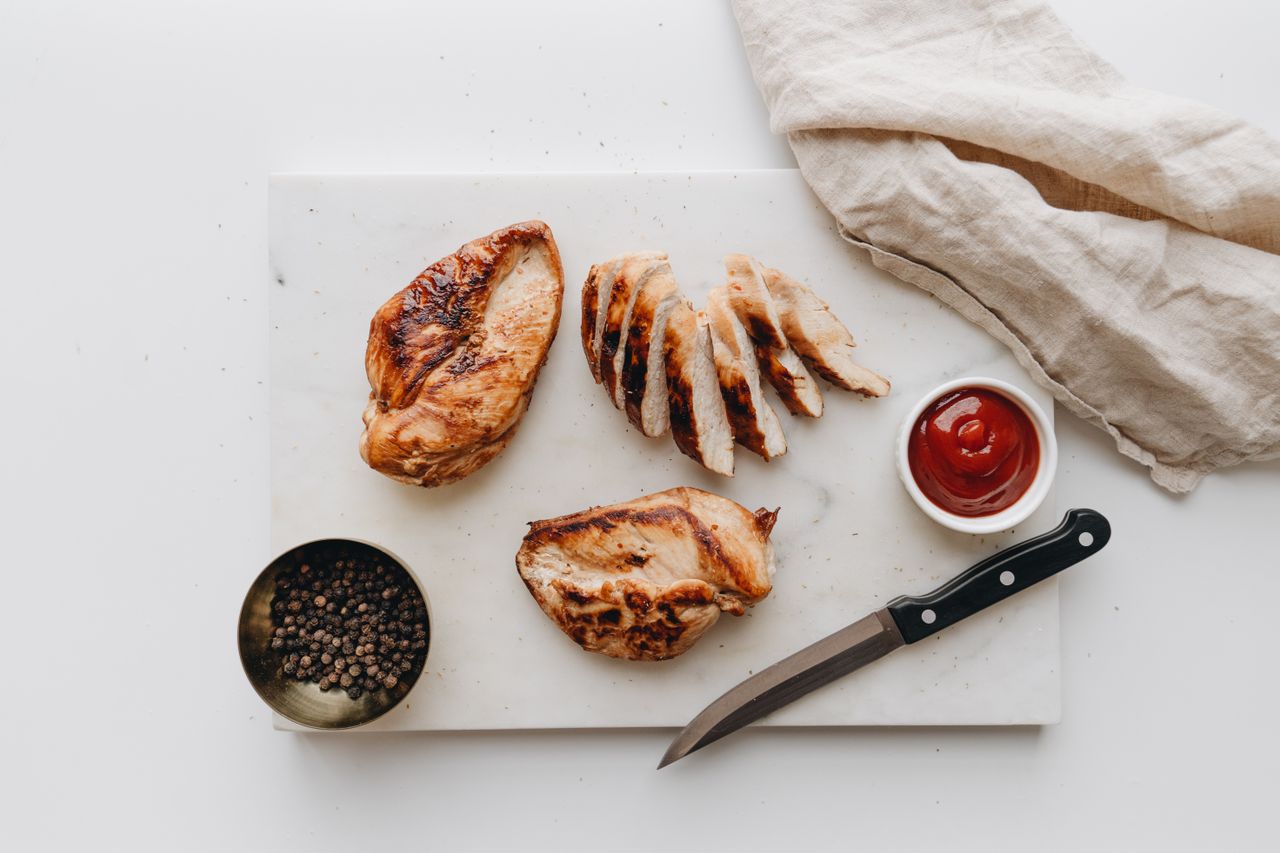
Chicken breast, 150 g → ~35 g protein
The benchmark of lean protein: one serving covers almost a third of the daily target with minimal fat. Turkey and lean beef are at roughly the same level (beef a bit fattier).
Cottage cheese 5%, 200 g → ~34 g protein
A pack of cottage cheese matches a portion of meat on protein. Thanks to casein it keeps you full for a long time — a great "protein" dinner. The fat-free version is slightly drier but nearly the same on protein.
Cod, 150 g → ~27 g protein
Protein with minimal calories and fat — white fish is ideal for that. Oily fish (salmon, trout) gives the same protein but more calories from its healthy fats.
2 eggs → ~13 g protein
A convenient protein base for breakfast with a complete amino acid profile. Add cottage cheese or vegetables to two eggs and the meal becomes genuinely filling.
Greek yogurt, 150 g → ~15 g protein
A snack that actually works toward your target, and a sour-cream swap in dressings too. Unsweetened is best: "fruit" versions have the same protein but more calories.
How it adds up in a day
Hitting the target is easier than it seems if you spread protein across meals:
- Breakfast: 2 eggs + 100 g cottage cheese → ~30 g
- Lunch: chicken breast 150 g → ~35 g
- Snack: Greek yogurt 150 g → ~15 g
- Dinner: cod 150 g → ~27 g
That's ~107 g of protein — the target for someone ~65-70 kg, reached with ordinary foods, no powders or effort.
"Protein", but not really
Marketing loves the word "protein", but the numbers matter more than the label:
- Sausages. There's protein in there, but usually more fat — in practice it's more of a fatty product.
- Protein bars. Often confectionery with some added protein: sugar and calories are frequently higher than in honest cottage cheese.
- Nuts. Healthy, but they're about fat, not protein: a handful has little protein and a lot of calories.
Simple rule: look at the grams of protein per 100 g in the nutrition facts, not the word on the wrapper.
Takeaway
A protein target isn't an abstraction but a few clear servings a day: chicken, cottage cheese, eggs and fish cover it almost effortlessly. Keep the 1.6 g per kg guideline, count protein per real serving rather than "by eye", and don't fall for "protein" marketing where the numbers are all fat or sugar.
In NutriApp every food shows protein per serving — handy for building your day and checking whether you hit the target or regularly fall short. We collected ready high-protein snacks in a separate roundup under 200 kcal.
So do you hit your protein target, or usually fall short? Share it in the VK discussion.
Count calories automatically in NutriApp
Open NutriApp