Side dishes in a deficit: 5 light ones and three that are three times heavier
How many calories are in a 150 g side dish — vegetables, potato, buckwheat, pasta and rice. Why mash, fried potatoes and fries are several times heavier, and what adds calories unnoticed.
We've covered soups — let's move on across the plate. Protein usually gets chosen deliberately: chicken breast, fish, cottage cheese. The side dish gets added out of habit — and it's usually what decides whether lunch lands at 350 kcal or 700.
Here are 5 common side dishes with numbers per 150 g portion, plus three options that weigh several times more at the same volume on the plate. All values come from the NutriApp food database — the same ones you'll see in the app.
Why the side dish matters more than it seems
Chicken breast is ~170 kcal per 150 g, and there isn't much room for that to change. A side dish of the same volume can cost 45 kcal or 470 — a tenfold spread. Yet on the plate they all look about the same: a mound next to the meat.
The second thing is that side dishes almost never get weighed. "A spoon of rice" easily turns out to be 200-250 g, and lunch quietly climbs a couple of hundred calories.
1. Steamed or grilled vegetables — ~45 kcal
Broccoli, cauliflower, zucchini, green beans. The lightest side there is: a full plate of volume at almost no calories (broccoli is 34 kcal per 100 g, zucchini 24).
A useful trick is half-and-half: 75 g of grains plus 75 g of vegetables instead of 150 g of grains alone. The portion looks the same, the calories nearly halve, and the extra fiber keeps you full longer.
2. Boiled or baked potato — ~115-140 kcal
Potato fits into a deficit just fine, despite its reputation. Boiled potato is 77 kcal per 100 g, baked is 93. For a 150 g portion that's 115 and 140 kcal — less than buckwheat.
What ruined the potato's reputation isn't the vegetable but the oil: anything fried or dressed immediately doubles.
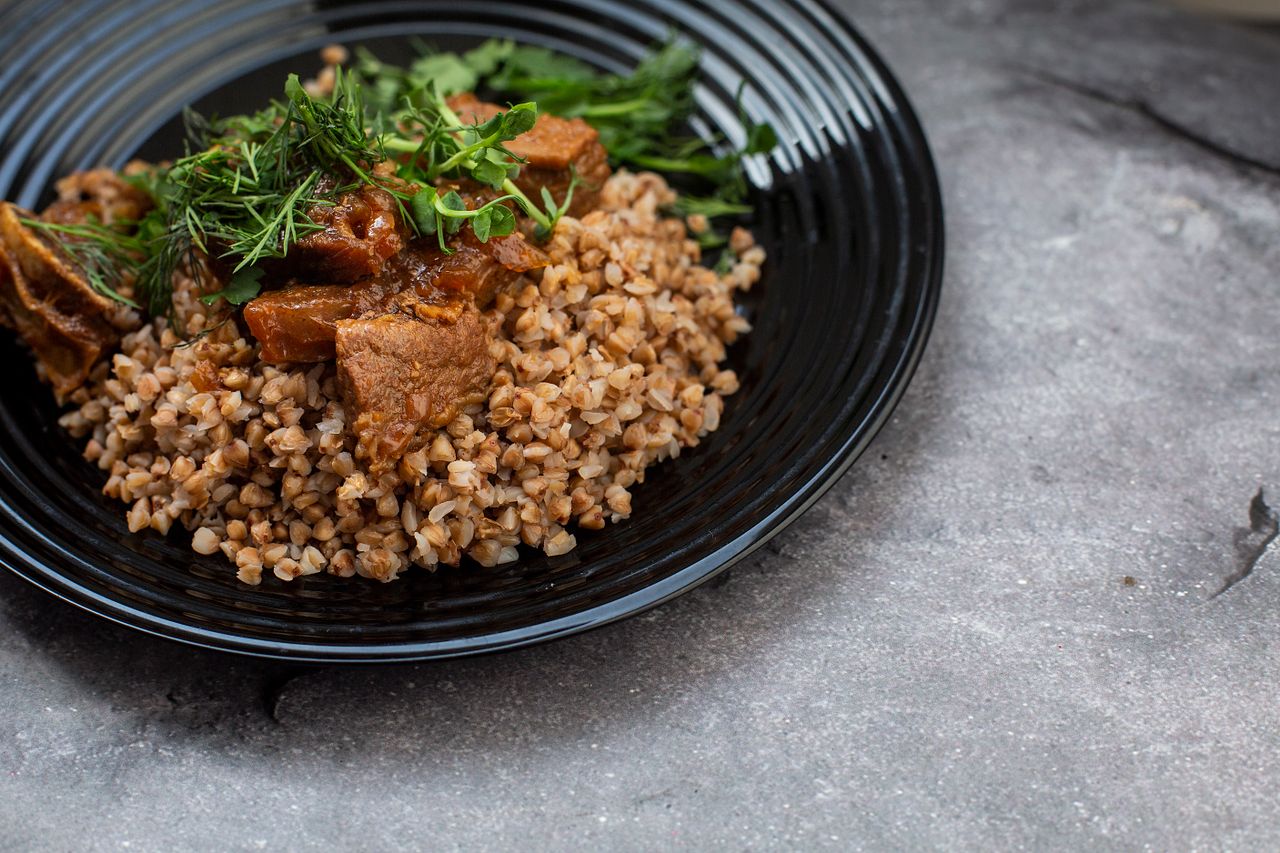
3. Cooked buckwheat — ~165 kcal
P: 6 | F: 2 | C: 32
The most protein-rich of the everyday grains: 4.2 g of protein per 100 g cooked versus 2.7 g for rice. A good choice when the side goes with something lean — fish or a vegetable stew. We have a separate breakdown of how much protein you need and where to get it.
4. Cooked pasta — ~195 kcal
P: 8 | F: 1 | C: 39
Pasta isn't forbidden food: 131 kcal per 100 g cooked, so a 150 g portion is 195 kcal and 8 g of protein — more than buckwheat. The sauce decides everything: a cream or cheese sauce easily adds another 150-200 kcal, a tomato one 30-50.
5. Cooked rice — ~195 kcal
P: 4 | F: 0.5 | C: 42
Familiar, quick and neutral in flavor, but the lowest in protein — 2.7 g per 100 g. Brown rice is practically the same calorie-wise (337 versus 344 kcal dry); the difference is fiber, not numbers, so choose it for fullness rather than calorie savings.
Three side dishes that are several times heavier
Same 150 g, entirely different numbers:
- Mashed potato — ~160 kcal (milk and butter)
- Fried potatoes — ~290 kcal
- French fries — ~470 kcal
The same potato: baked is 140 kcal, fries are 470. That 330 kcal gap comes purely from the oil absorbed during frying. More on fast-food sides is in our fast food breakdown.
What adds calories unnoticed
- A spoon of butter in your porridge — +75 kcal
- A handful of grated cheese — +70 kcal
- Cream sauce with pasta — +150-200 kcal
- A spoon of mayonnaise — +95 kcal
It's usually these add-ons, not the side itself, that move lunch from 400 kcal to 600. Buckwheat with butter and cheese isn't 165 kcal any more — it's 310.
How to build the plate
- Half the plate vegetables, a quarter protein, a quarter grains or potato. This old rule works precisely because it shrinks the side dish automatically.
- A side is 150 g, not "however much fits". Weigh your usual portion once: chances are it's 200-250 g.
- Measure the oil by the spoon, not by eye. One spoon in the porridge turns a light side into a medium one.
- The cooking method matters more than the choice of food. Baked potato is lighter than cooked buckwheat, fried potato is twice as heavy.
Takeaway
The side dish is the most underrated part of the plate: at the same volume the spread runs from 45 to 470 kcal. Vegetables, potato, buckwheat, pasta and rice all fit into a deficit comfortably — the trouble starts with oil and sauces.
In NutriApp every side exists both raw and cooked, so you pick what you actually weighed and see the total together with the oil and sauce. On Thursday we'll look at why buckwheat has two different numbers — 313 and 110 kcal — and how that confusion makes food diaries wrong by hundreds of calories.
So what's your main side dish? Share it in the VK discussion.
Count calories automatically in NutriApp
Open NutriApp