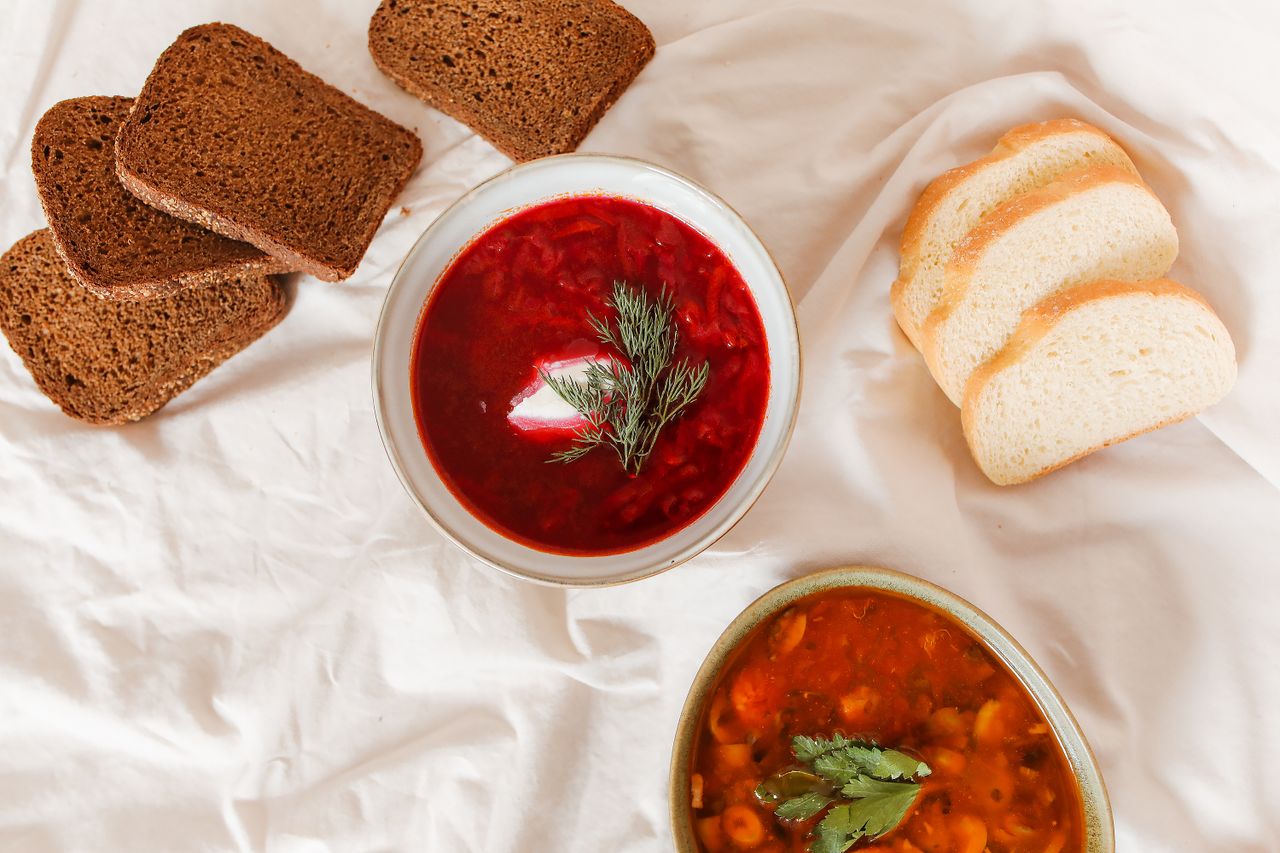
Calories in soups: borscht, solyanka, kharcho and cream soup — per bowl
Calories and macros of 10 popular soups per 100 g and per 300 g bowl — from chicken noodle to meat solyanka. Where the nearly threefold gap comes from, which soups are the most protein-rich, and what adds calories unnoticed.
On Tuesday we put together light autumn soups under 250 kcal with quantities for a whole pot. Today it's the soups people eat most often: in canteens, in cafés and at home on weekends. Let's see how much is really in the bowl and why the gap between them reaches almost three times.
All numbers below come from the NutriApp food database — the same values you'll see in the app. A portion is a standard 300 g bowl, without sour cream or bread (those are covered separately).
Soup calories: the summary list
Per 100 g → per 300 g bowl:
- Shchi (cabbage soup) — 32 kcal → ~95 kcal
- Chicken noodle soup — 36 kcal → ~110 kcal
- Rassolnik (pickle and barley soup) — 42 kcal → ~125 kcal
- Borscht without meat — 49 kcal → ~150 kcal
- Pumpkin cream soup — 60 kcal → ~180 kcal
- Pea soup — 66 kcal → ~200 kcal
- Mushroom cream soup — 70 kcal → ~210 kcal
- Borscht with meat — 74 kcal → ~220 kcal
- Kharcho (Georgian beef and rice soup) — 85 kcal → ~255 kcal
- Meat solyanka — 104 kcal → ~310 kcal
They all go by the same name — "soup for lunch" — yet shchi and meat solyanka differ by more than three times.
Light: under 150 kcal a bowl
Shchi (P: 3 | F: 6 | C: 9) is the lightest soup on the list. Cabbage weighs next to nothing, and most of the calories come from the oil used to fry the vegetables.
Chicken noodle soup (P: 8 | F: 3 | C: 11) is light and familiar, but the canteen version has little meat, so only 8 g of protein. Made at home with chicken breast you get a more filling chicken soup — about 165 kcal and 20 g of protein.
Rassolnik (P: 6 | F: 5 | C: 15) — pearl barley and pickled cucumbers. Few calories but a lot of salt: the next morning, water can add a couple of hundred grams on the scale, and that's water, not fat.
Borscht without meat (P: 3 | F: 7 | C: 20) — beetroot, cabbage, carrot, potato. Light on its own; what makes it heavy is what goes on top.
Medium: 180-220 kcal
Pumpkin cream soup (P: 5 | F: 9 | C: 21) is 60 kcal per 100 g in the database. A restaurant version made with heavy cream is noticeably heavier.
Pea soup (P: 12 | F: 5 | C: 26) — peas are calorie-dense like all legumes, but they bring a decent amount of protein too. With smoked meats it comes out higher.
Mushroom cream soup (P: 8 | F: 15 | C: 14) — almost two-thirds of its calories come from the fat in cream and butter, with little protein. A restaurant version on heavy cream reaches 100-120 kcal per 100 g, which means up to 350 per bowl.
Borscht with meat (P: 14 | F: 12 | C: 15) — meat takes borscht from 49 to 74 kcal per 100 g, but it also adds 11 g of protein per bowl.
Heavy: 250 kcal and up
Kharcho (P: 15 | F: 14 | C: 18) — fatty beef, rice and oil. This is no longer a starter but a full lunch.
Meat solyanka (P: 21 | F: 21 | C: 11) is the calorie champion. Sausages, smoked meats, olives — essentially a cold-cuts platter diluted with broth.
The non-obvious part: the most caloric soups are the most protein-rich
Looking at calories alone, solyanka and kharcho seem like the "bad" ones. But they carry 21 and 15 g of protein — close to a chicken main course. A bowl like that can be your whole lunch, and then 255-310 kcal is perfectly fine.
The worse ratio belongs to mushroom cream soup: 210 kcal but only 8 g of protein and 15 g of fat. The same calories as borscht with meat, with noticeably less fullness.
A simple rule: if the soup is your whole lunch, pick one with protein. If it's a starter, go light — shchi, chicken noodle or meatless borscht.
What we add without noticing
The bowl is only part of lunch. On top usually go:
- A spoon of 20% sour cream — +40 kcal
- A spoon of mayonnaise (yes, some people put it in borscht) — +95 kcal
- A slice of bread — +70-80 kcal
- A garlic pampushka bun — +120-150 kcal
- A handful of croutons with a cream soup — +100 kcal
The result is telling: borscht with meat (220) + sour cream (40) + two pampushkas (~270) is over 500 kcal — almost a whole light set lunch. We have a separate breakdown of the set lunch on how not to overeat in canteens and cafés.
How to eat soup in a deficit
- Count a bowl of soup as a full meal, not a "starter before the main". Soup plus a main plus a sweet drink easily adds up to 900+ kcal.
- Choose 15% sour cream or swap it for yogurt — 15% is about a quarter lighter than 20%, and plain yogurt is several times lighter.
- One slice of bread, logged right away. It's the most common unlogged hundred calories.
- Make cream soup at home on broth with a potato instead of cream — the creaminess stays, the calories drop noticeably.
- Weigh your bowl once. Canteen and café portions range from 250 to 400 g, and with solyanka every extra 100 g is another 100 kcal. That's why in a café it easily reaches 350-400 kcal a portion.
Takeaway
Soups differ in calories almost threefold: from ~95 kcal for shchi to ~310 for meat solyanka. But calories aren't the only criterion: the heaviest soups are also the most protein-rich and can fully replace lunch. The main hidden calories aren't in the soup itself but next to it: sour cream, bread and pampushkas.
In NutriApp all of these soups are in the database — pick one, set the weight of your bowl, and add sour cream and bread as separate lines. That way you see the honest total, not just the soup. Light homemade options with quantities are in Tuesday's roundup.
So what do you usually have for lunch — borscht, solyanka or something lighter? Share it in the VK discussion.
Count calories automatically in NutriApp
Open NutriApp