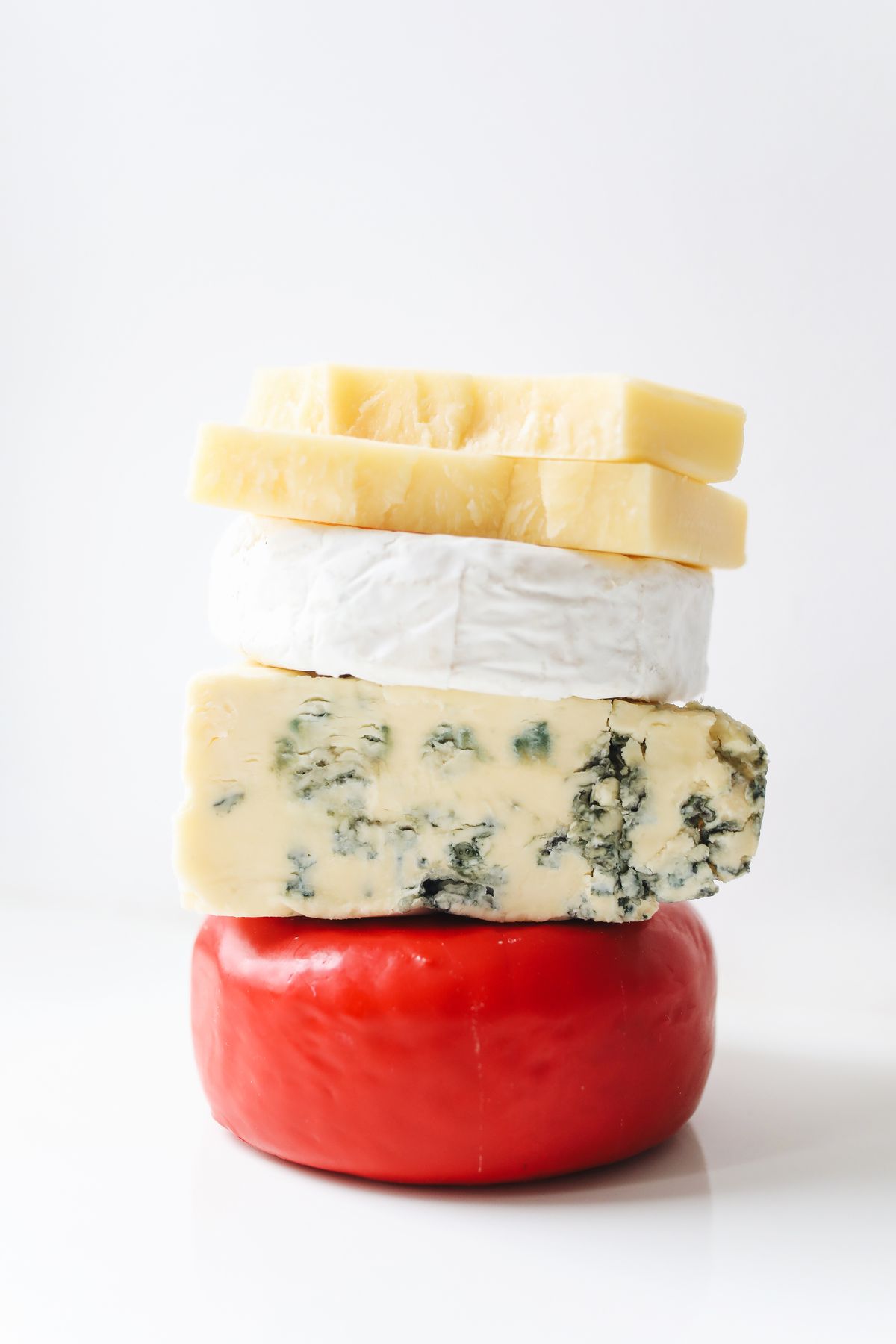
Calories in dairy: why the percentage on the pack is fat, not protein
Cottage cheese, kefir, yogurts, cheese, sour cream and butter — calories per 100 g and per real portion. Why 0% and 9% cottage cheese hold the same protein, what a slice of cheese actually costs, and where the hidden hundreds hide.
"I take the 0% one, so it's basically calorie-free" — that's the usual logic in the dairy aisle. The percentage on the pack is the share of fat: it does drive the calories, but it says nothing about the protein people buy dairy for in the first place.
Here's the whole aisle laid out with numbers from the NutriApp food database — from 24 kcal for ayran to 748 for butter.
Cottage cheese: same protein, different fat
- Cottage cheese 0% — 71 kcal per 100 g (P 16.5 | F 0.1)
- Cottage cheese 5% — 121 kcal (P 17.2 | F 5)
- Cottage cheese 9% — 159 kcal (P 16.7 | F 9)
The protein is identical in all three; the entire 88 kcal gap is fat. On a standard 180 g pack that's 128 kcal against 286 — a whole snack of a difference.
But the conclusion isn't "always buy 0%". The fattier version is more filling and tastes better, which makes it easier not to reach for biscuits an hour later. The honest choice is by taste and by how many calories you have left for the day, not by the word "fat-free".
Milk and fermented dairy: the lightest part of the aisle
Per 100 g:
- Ayran, tan — 24 kcal
- Skim milk — 31
- Kefir 1% — 40
- Milk 2.5% — 52
- Kefir 2.5%, prostokvasha — 53
- Milk 3.2% — 59
- Plain yogurt — 60
- Skyr — 63
- Ryazhenka 4%, baked milk — 67
- Snezhok — 79
- Ryazhenka 6% — 85
- Fruit yogurt — 95
- Greek yogurt — 97
The spread here is narrow: even the fattiest option is 3-4 times lighter than cheese. A glass of 3.2% milk is 148 kcal, skim milk 78; a glass of 2.5% kefir is 133 kcal.
The one trap is fruit yogurt: 95 kcal against 60 for plain, only 3.5 g of protein, and the whole markup is sugar. Adding berries to plain yogurt is cheaper — 50 g of blueberries is +22 kcal.
Plant milks: not always lighter
- Almond — 17 kcal per 100 g
- Cashew — 25
- Oat — 47
- Soy — 54
- Rice — 60
- Coconut — 70
Almond milk really is three times lighter than dairy milk, but oat milk is close to 2.5% milk and holds 1 g of protein against 2.8. An oat milk latte is 111 kcal for a 300 ml cup. Choosing plant milk is a question of taste and lactose tolerance, not an automatic calorie saving.
Cheese: count slices, not 100 g
Per 100 g:
- Ricotta — 174 kcal
- Adyghe cheese — 240
- Processed cheese — 257
- Brynza — 260
- Feta — 264
- Mozzarella — 280
- Suluguni — 290
- Camembert — 300
- Halloumi — 321
- Brie — 334
- Smoked string cheese — 340
- Maasdam — 350
- Gouda — 356
- Russian cheese — 364
- Parmesan — 392
- Cheddar — 402
- Gruyère — 413
- Mascarpone — 450
Almost nobody eats 100 g of cheese in one sitting, so the per-100 g number looks alarming but explains little. Count in slices instead: a 30 g slice of a hard yellow cheese is 109 kcal, parmesan 118, mozzarella 84, Adyghe cheese 72.
Three slices across a day is 330 kcal, and they're the easiest thing to miss in a food diary: cheese is almost always eaten in passing rather than put on a plate.
Cheese is not a protein food
Count protein per 100 kcal instead of per 100 grams:
- Cottage cheese 0% — 23 g of protein per 100 kcal
- Chicken breast — 21 g
- Skyr — 17 g
- Parmesan — 9 g
- Mozzarella — 8 g
- Hard yellow cheese — 6.6 g
Cheese genuinely holds a lot of protein — 24 g per 100 g for a Russian-style hard cheese, 35.8 for parmesan. But it holds even more fat, so on protein per calorie it loses to everything: for the same calories cottage cheese gives you three times as much. The full table by food is in a separate post.
What adds calories without being noticed
- Sour cream 15% — 158 kcal per 100 g, two spoons in soup is +63
- Sour cream 20% — 206 kcal, the same two spoons +82
- Cream 10% in coffee — 118 kcal, 50 ml is +59
- Boiled condensed milk — 328 kcal
- Sweet curd mass — 340 kcal: nearly five times the calories of the cottage cheese it's made from
- Butter — 748 kcal, the heaviest product in the aisle; 10 g on a slice of bread is +75
All of these have one thing in common: they're eaten by the spoonful and never logged. A spoon of sour cream and a slice of cheese across a day often outweigh the 0%-versus-9% decision people agonise over in the shop.
How to count it in practice
- Weigh cheese, at least at first: 30 g and 60 g look almost identical by eye, and the gap is 109 kcal.
- Count milk and kefir in glasses — 250 ml — instead of measuring every time.
- Log cottage cheese by the pack: 150, 180 or 200 g is printed on it.
- Log add-ons separately — sour cream, butter and honey in your cottage cheese are their own entries, not part of "cottage cheese".
The takeaway
The spread inside the dairy aisle is wider than the gap between chicken and pork: from 24 kcal per 100 g of ayran to 748 for butter. Read the percentage as fat, pick cottage cheese by taste, count cheese in slices and keep it out of your protein column, and log sour cream, cream and butter as separate lines.
In NutriApp every fat percentage and every type of cheese is a separate entry with exact macros, so there's no guessing which cottage cheese you ate. Which dairy works as a snack and how to stay under 200 kcal is in Tuesday's post.
Do you log your cheese, or does it slip past the diary? Tell us in the VK discussion.
Count calories automatically in NutriApp
Open NutriApp