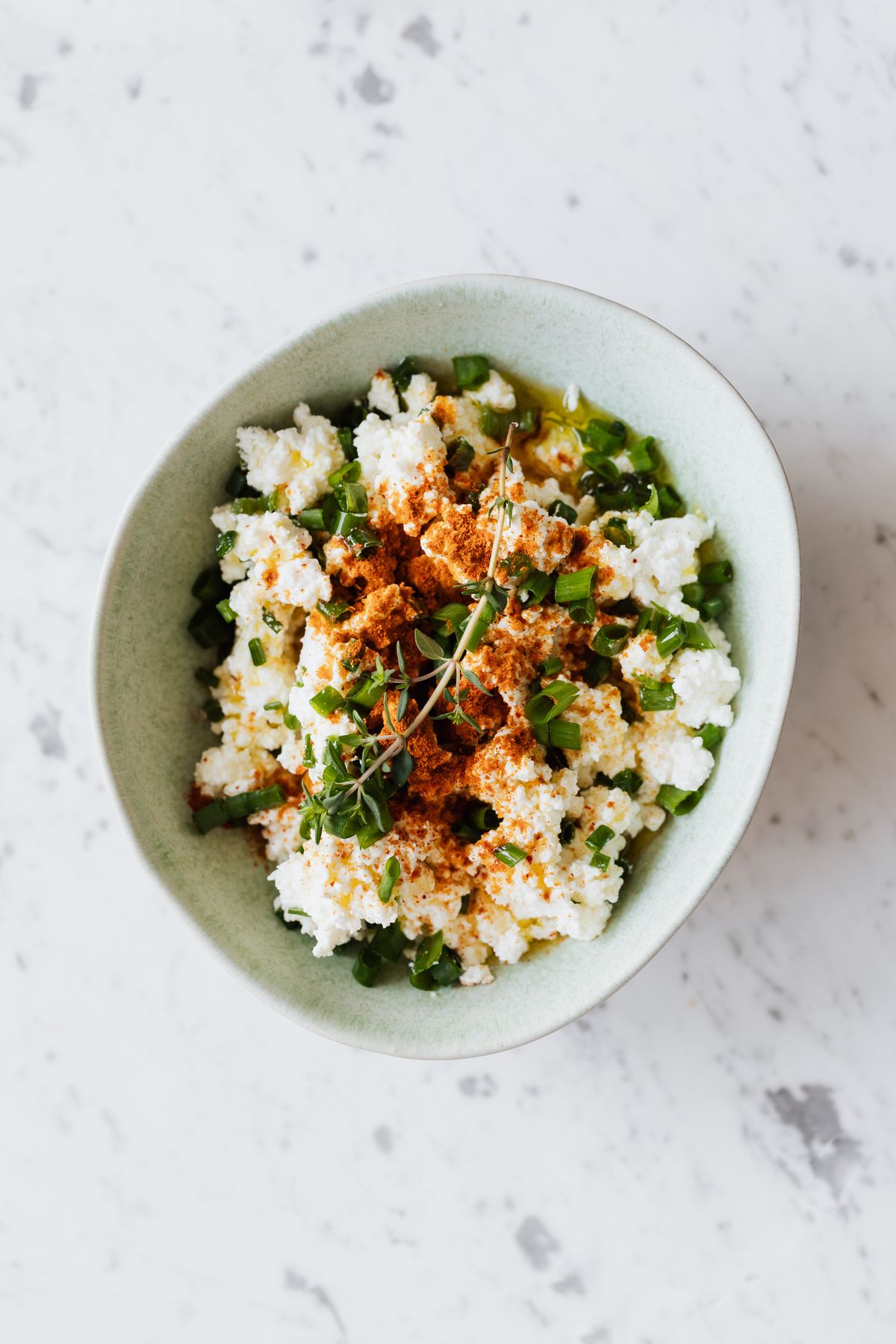
Dairy in a deficit: 5 snacks under 200 kcal with as much protein as meat
Cottage cheese, skyr, Greek yogurt, Adyghe cheese and kefir — calories and protein per portion. Why the percentage on the pack is fat and not protein, and where dairy beats chicken breast on protein density.
We've covered protein for dinner and the calories in different cuts of meat — and all of it needs a pan, an oven and time. But the fastest protein in the house sits in the dairy aisle: nothing to cook, nothing to recalculate between raw and cooked, and the grams are already printed on the pack.
Here are 5 evening options that stay under 200 kcal, with numbers from the NutriApp food database.
Why dairy is convenient in a deficit
- No cooking. Which means no oil in the pan, no breading and no sauce — exactly the things that usually make a protein meal heavy.
- No raw-versus-cooked maths. With grains and meat that's the single biggest source of logging errors; cottage cheese has only one state.
- The portion is already known. A pack of cottage cheese is 150 or 180 g, a glass of kefir is 250 ml. The only thing you really need to weigh is cheese.
- Protein is cheaper than in meat. A pack of cottage cheese usually costs less than a portion of fish or turkey with the same protein.
The main rule: the percentage is fat, not protein
The most common mistake in the dairy aisle is reading "0%" as "no calories" and "9%" as "more filling, more protein". The percentage on the pack is the share of fat, and protein barely depends on it:
- Cottage cheese 0% — 71 kcal per 100 g (P 16.5 | F 0.1)
- Cottage cheese 5% — 121 kcal (P 17.2 | F 5)
- Cottage cheese 9% — 159 kcal (P 16.7 | F 9)
The protein is the same in all three; the entire 88 kcal gap is fat. On a 150 g pack that's already 132 kcal — a whole snack you didn't plan. And plenty of people find 9% tastier and more satisfying, so the honest choice is by taste and by how many calories you have left for the day, not by the word "fat-free".
1. Cottage cheese 0%, 150 g — ~107 kcal
P: 25 | F: 0.1
The best protein density in the whole fridge. One pack gives 25 g of protein — the upper end of what the body actually puts to use in a single meal.
If plain cottage cheese is too dry to finish, the fix isn't sour cream and honey but berries: 50 g of blueberries is +22 kcal, 100 g of strawberries +41. A spoonful of honey adds 69 kcal — two thirds of the cottage cheese itself.
2. Skyr, 150 g — ~95 kcal
P: 16.5 | F: 0.3
The Icelandic relative of cottage cheese: thick, slightly sour, almost fat-free. Slightly less protein, but the texture is closer to yogurt — useful when grainy curd doesn't go down.
3. Greek yogurt 0%, 150 g — ~89 kcal
P: 15 | F: 0.6
The lightest of the protein options. Take the 0% version with no fruit layer: regular Greek yogurt is 97 kcal per 100 g against 59, and the whole difference is fat.
Fruit yogurt doesn't belong in this group at all: 95 kcal per 100 g against 60 for plain, only 3.5 g of protein, and the extra is sugar.
4. Adyghe cheese, 50 g — ~120 kcal
P: 9 | F: 7
The only cheese that comfortably fits into a snack: 240 kcal per 100 g against 364 for a hard yellow cheese. It's young and full of water rather than fat. With tomatoes and herbs it makes a proper evening plate for 150-170 kcal.
5. Kefir 1%, a 250 ml glass — ~100 kcal
P: 7 | F: 2.5
Not much protein, but this is the option for when you want to drink rather than eat. A glass before bed shuts down the urge to chew something for 100 kcal — cheaper than anything else in the fridge.
Protein per 100 kcal: where dairy beats meat
Count protein per 100 calories instead of per 100 grams and it becomes clear what you're actually paying calories for:
- Cottage cheese 0% — 23 g of protein per 100 kcal
- Chicken breast — 21 g
- Skyr and Greek yogurt 0% — 17 g
- Parmesan — 9 g
- Mozzarella — 8 g
- Hard yellow cheese — 6.6 g
By this measure cottage cheese beats chicken breast, and cheese loses to everything: it does hold a lot of protein, but it holds even more fat. "I had some cheese to get my protein in" doesn't work — for the same calories cottage cheese gives you three times as much. The full table by food is in a separate post.
And these are heavier than they look
Same 150 g portion:
- Cottage cheese 9% — ~239 kcal (the same protein as 0%)
- Fruit yogurt — ~143 kcal, with only 5 g of protein
- Sweet curd mass — ~510 kcal: that's a dessert, not a snack, and nearly five times the calories of the cottage cheese it's made from
Plus the add-ons that rarely make it into the diary:
- Sour cream 20%, two spoons — +82 kcal
- Cream 10% in coffee, 50 ml — +59 kcal
- Butter, 10 g on a slice of bread — +75 kcal
- A 30 g slice of cheese — +109 kcal, and it's rarely just one a day
The takeaway
The dairy aisle is the fastest way to cover your protein without cooking, but the spread inside it is wider than the gap between chicken and pork: from 71 kcal per 100 g of cottage cheese to 748 for butter.
Three rules cover almost everything: read the percentage as fat, not protein; count cheese in slices and don't file it under protein; and remember that the fruit layer in yogurt and the glaze on a curd bar cost more than the dairy underneath.
In NutriApp every fat percentage and every type of cheese is a separate entry with exact macros, so you never have to guess which cottage cheese you ate. Ready-made snacks with weights, dairy and otherwise, are collected in a separate post.
What's your usual evening pick — cottage cheese, yogurt or a glass of kefir? Tell us in the VK discussion.
Count calories automatically in NutriApp
Open NutriApp