Calories in meat: why the cut matters more than the animal
Calories and macros of different meats per 100 g — from turkey breast to pork neck. Why pork tenderloin is lighter than chicken thigh, what makes ground meat a trap, and how cooking changes the numbers in your diary.
"Pork is fatty, chicken is diet food" — that's what most people assume. In reality pork tenderloin is lighter than chicken thigh, and that's not an exception but the rule: within a single animal the calorie spread is wider than between animals.
On Tuesday we put together protein for dinner under 250 kcal. Today we go deeper into meat, using numbers from the NutriApp food database.
Calories per 100 g of raw meat
- Turkey breast — 104 kcal (P 23.5 | F 1)
- Chicken breast — 113 kcal (P 23.6 | F 1.9)
- Pork tenderloin — 142 kcal (P 19.4 | F 7.1)
- Turkey thigh — 144 kcal (P 20 | F 7)
- Ground turkey — 160 kcal (P 21 | F 8)
- Chicken thigh — 185 kcal (P 19.5 | F 11)
- Beef tenderloin — 218 kcal (P 20.2 | F 15)
- Stewed beef — 232 kcal (P 16.8 | F 18.3)
- Ground beef — 254 kcal (P 17.2 | F 20)
- Pork neck — 267 kcal (P 16.1 | F 22.8)
Protein is nearly the same everywhere — the fat does the spreading
The key thing in that table: protein sits at roughly the same level across the board, 16-24 g per 100 g. Fat runs from 1 g in turkey breast to 22.8 g in pork neck — twenty times more.
From there it's simple arithmetic: a gram of protein gives 4 kcal, a gram of fat gives 9. In pork neck, about 205 of the 267 kcal come from fat — more than three quarters. In turkey breast fat accounts for less than a tenth of the calories.
Which leads to the conclusion that breaks the usual logic: choosing "chicken or pork" matters far less than choosing the cut. Lean pork is lighter than fatty chicken — 142 kcal for tenderloin against 185 for chicken thigh.
Ground meat is its own trap
Ground beef is 254 kcal per 100 g. That's more than the tenderloin it supposedly comes from, for a simple reason: fatty trimmings go into the grinder, otherwise the result is dry and bland.
What to do about it:
- Buy ground turkey — 160 kcal against 254, nearly a third lighter.
- Grind your own from tenderloin or breast if you have a grinder.
- Count it honestly. Four patties from 500 g of ground beef are 1,270 kcal of meat alone, before any oil or breading.
How cooking changes the numbers
Meat is the mirror image of grains. Grains absorb water while cooking and get "lighter"; meat loses water, becomes denser, and 100 g of the cooked product carries more calories than 100 g raw:
- Chicken breast: 113 kcal raw → 130 grilled → 137 boiled
- Beef: 218 kcal raw tenderloin → 199 roasted → 254 boiled
- Pork: 267 kcal raw neck → 270 roasted
The numbers behave differently across cuts because some of the fat renders out along with the water, and how much depends on the piece and the method. The practical takeaway is one: weigh it either always raw or always cooked, and log exactly the state you weighed. Mixing the two in one entry is the fastest way to be off by hundreds of calories.
What adds more than the choice of meat
- A tablespoon of oil in the pan — +135 kcal
- Breading — +100-150 kcal
- Cream sauce — +150-200 kcal
- Mayo-based marinade — +95 kcal per spoon
A baked chicken breast and the same breast breaded and fried differ by a factor of two — a bigger gap than the one between chicken and beef. So the cooking method deserves to be decided before the type of meat.
How to choose at the store
- Tenderloin and fillet are always lean, whichever animal they come from.
- Neck, thigh, belly and ribs are always fattier, likewise regardless of animal.
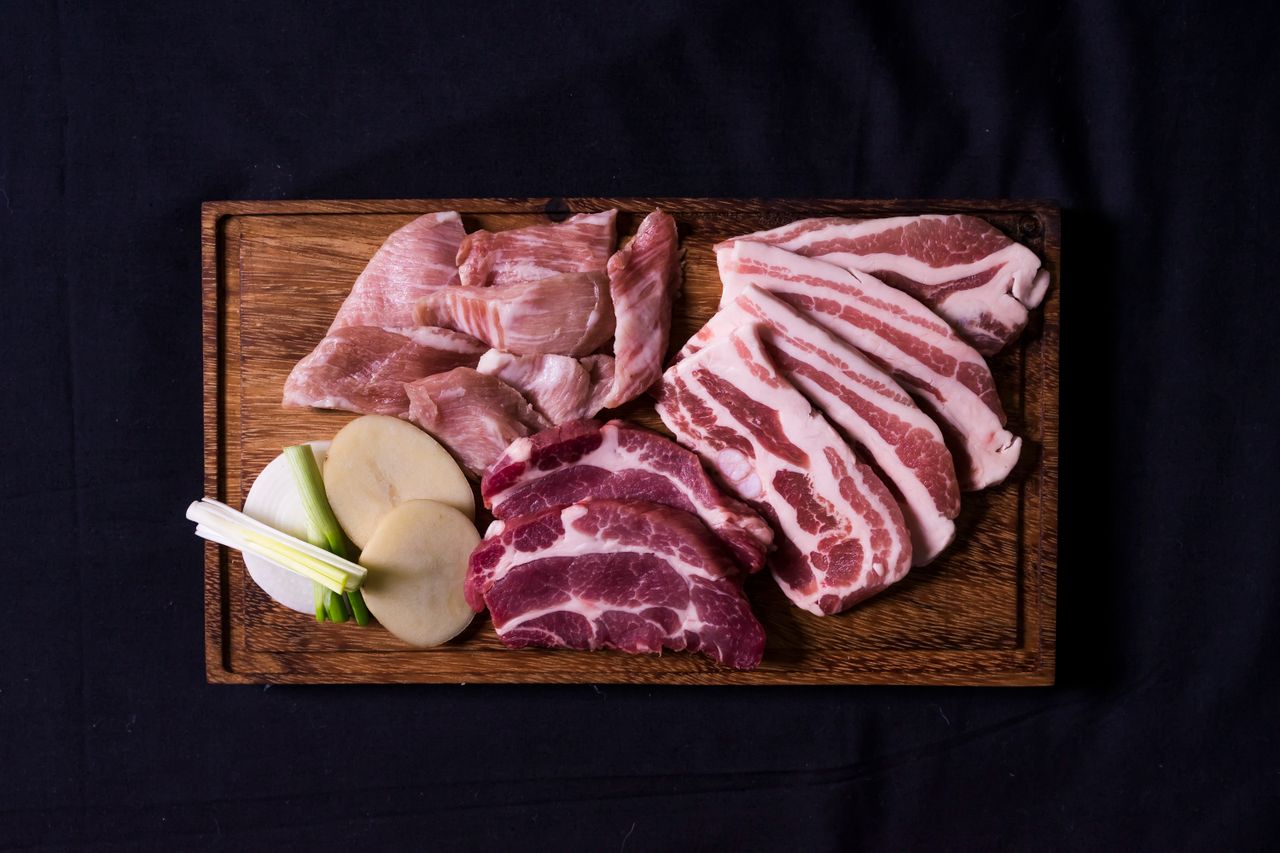
- Watch the white streaks. Marbling is flavor, but marbling is fat: the more of it, the higher the calories.
- Read ground meat by its composition, not its name: "homemade ground meat" can be 150 kcal or 300.
Takeaway
Meat varies threefold in calories — from 104 kcal for turkey breast to 267 for pork neck — and what decides it is the fat content of the cut, not the animal. Protein stays roughly equal everywhere, so you can pick freely on protein and look at the cut for calories.
In NutriApp cuts and cooking methods are separate entries, so there's no guessing which meat in which state to log. The protein content of foods in general is collected in a separate table.
So do you check the fat content of the cut, or buy out of habit? Share it in the VK discussion.
Count calories automatically in NutriApp
Open NutriApp