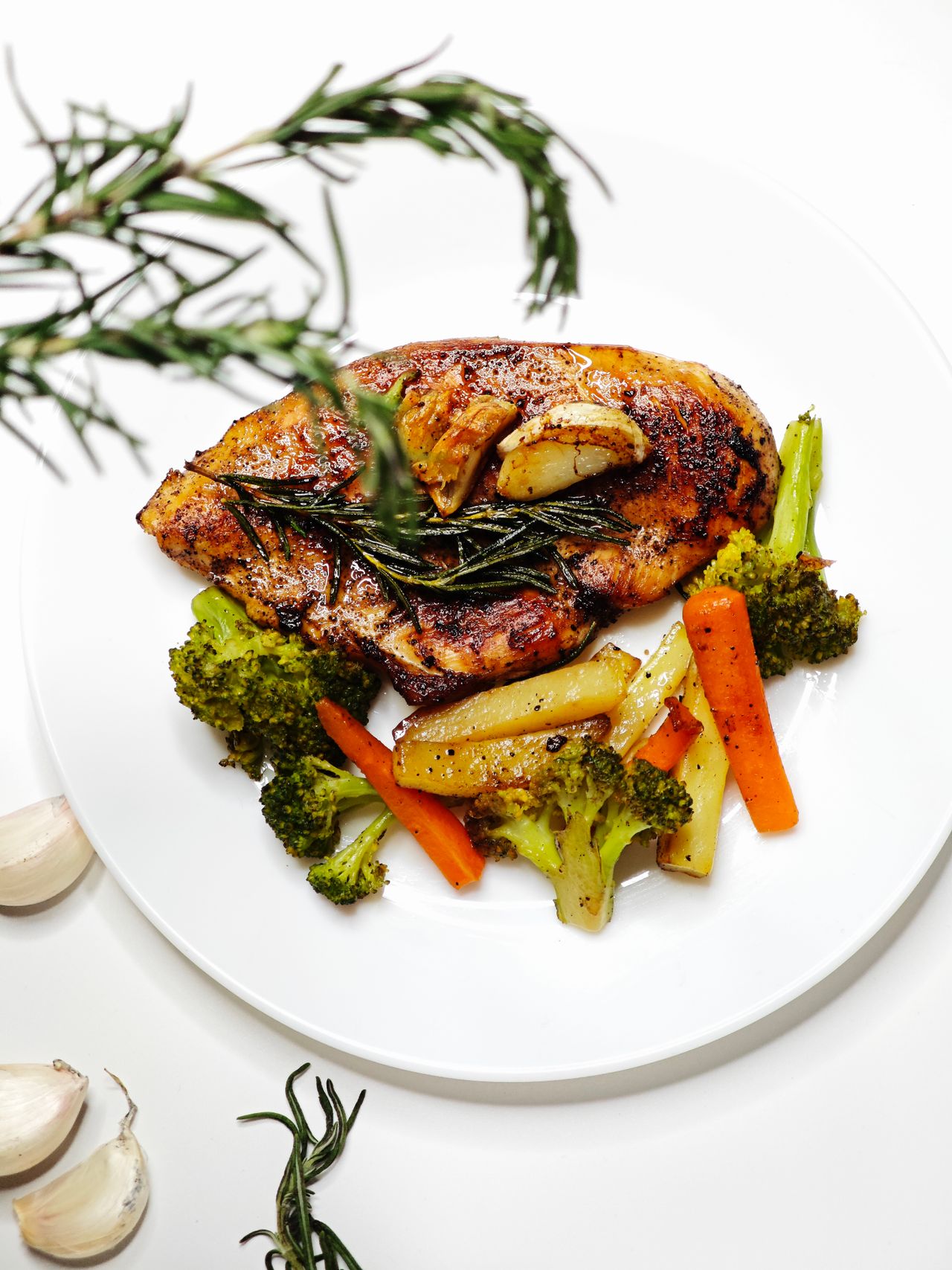
Protein for dinner: 5 options under 250 kcal per portion
Cod, shrimp, turkey, chicken breast and pink salmon — calories and protein per 150 g portion. Why the same portion of meat can cost 105 kcal or 400, and what really adds the calories in the pan.
We've covered soups and side dishes — that leaves the main part of the plate. Protein at dinner does two jobs at once: it keeps you full until morning and protects your muscle while you're in a deficit.
But "meat for dinner" covers a lot of ground: the same 150 g portion can cost 105 kcal or 400. Here are 5 options that stay under 250 kcal, with numbers from the NutriApp food database.
Why protein in the evening matters more than it seems
Three reasons to build dinner around the protein part:
- Fullness. Protein digests more slowly than carbs, so evening hunger and trips to the fridge before bed happen noticeably less often.
- Muscle. In a deficit the body is happy to give up more than fat. Enough protein is your main insurance against losing muscle.
- Thermic effect. Digesting protein costs the body noticeably more energy than digesting fat or carbs — a small but welcome bonus.
A reasonable target for one meal is 20-35 g of protein. How much you need per day and how to spread it out is in our post on protein sources.
1. Cod — ~105 kcal (150 g portion)
P: 24 | F: 1
The lightest protein available: 69 kcal per 100 g and almost no fat. Bake it with lemon and herbs — and never bread it: breadcrumbs and flour easily double the portion.
Pollock is practically identical if cod isn't around — 72 kcal per 100 g.
2. Shrimp — ~145 kcal
P: 30 | F: 2
The record holder for protein per calorie: 30 g per portion at 145 kcal. They cook in three minutes and work beautifully in a salad or with vegetables. Just not in a cream sauce — that adds more than the shrimp themselves.
3. Turkey breast — ~155 kcal
P: 35 | F: 2
Slightly leaner than chicken breast (104 kcal per 100 g versus 113) and usually cheaper. 35 g of protein per portion is roughly a third of the daily target for a 70 kg person.
4. Chicken breast — ~170 kcal
P: 35 | F: 3
It became a classic for a reason: the best combination of price, availability and protein. The usual complaint — it comes out dry — is a technique problem, not a sauce problem:
- cook it whole and slice it after, rather than frying small pieces;
- bake it in foil or a roasting bag instead of frying it hard;
- brine it in salted water for 20-30 minutes before cooking.
5. Pink salmon — ~210 kcal
P: 31 | F: 10
Red fish without the red price tag: 140 kcal per 100 g against 208 for Atlantic salmon. Fattier than cod, but that fat is the omega-3 that makes fish worth eating a couple of times a week.
And these are several times heavier
Same 150 g portion:
- Chicken thigh — ~280 kcal
- Beef tenderloin — ~325 kcal
- Ground beef — ~380 kcal
- Pork neck — ~400 kcal
Chicken breast and pork neck are 230 kcal apart, even though both are simply "meat" in conversation. That doesn't make pork off-limits — it makes it worth counting.
The calories come from what you cook it in, not the protein
- A tablespoon of oil in the pan — +135 kcal
- Breading — +100-150 kcal
- Cream sauce — +150-200 kcal
- Mayo-based marinade — +95 kcal per spoon
A chicken breast baked in foil and the same breast fried in oil with breading differ by a factor of two. So the cooking method deserves more attention than the choice of meat.
Takeaway
The protein part of dinner can weigh anywhere from 105 to 400 kcal at the same volume on the plate. Cod, shrimp, turkey, chicken breast and pink salmon deliver 24-35 g of protein within 250 kcal — enough to reach morning without raiding the fridge.
In NutriApp all of these exist raw and cooked, with different preparation methods, so you log what was actually in the pan. The protein content of foods in general is collected in a separate table.
On Thursday we'll go deeper into meat: why pork tenderloin is lighter than chicken thigh, and why the cut matters more than the animal.
So what's usually on your plate for dinner — chicken, fish or meat? Share it in the VK discussion.
Count calories automatically in NutriApp
Open NutriApp